
How to Keep Garage Cabinets From Becoming a Catch-All for Clutter
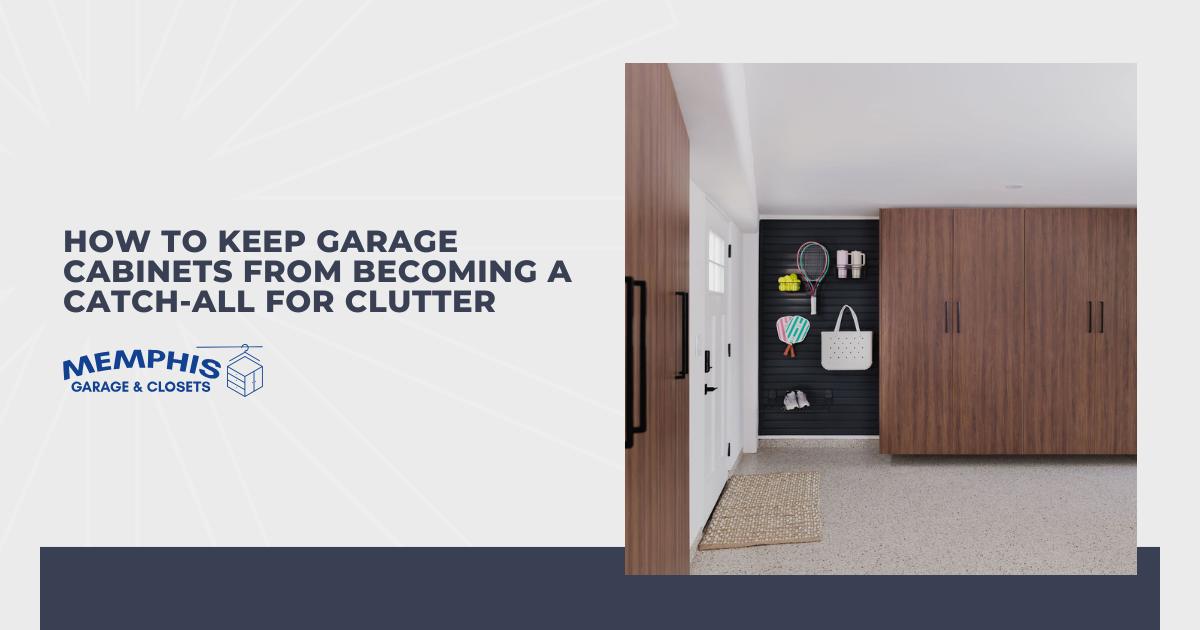
Garages don't stay disorganized because the cabinets are too small. My experience with these builds is that the ones people call "cluttered" usually just have cabinets with no assigned job. Garage cabinets are supposed to solve your clutter problem, not become the newest place to hide it. It's an easy trap to fall into: a drawer that started out holding sports gear slowly fills up with loose tools, half-used paint cans, and things you didn't know where else to put.
Fixing that missing structure doesn't mean tearing out your cabinets and starting over. A few consistent habits and a bit of intentional zoning can turn cabinets that collect everything into ones that actually organize everything. Once that system is in place, keeping clutter out becomes second nature and stops feeling like a constant battle.
These simple strategies can keep your garage cabinets working for you instead of against you:
- Assign every cabinet a single category
- Zone by frequency of use, not just category
- Use labels to reinforce the system
- Match storage style to what's being stored
- Reserve space for the undecided and the new
- Set a one-in, one-out rule for tight categories
- Do a quarterly reset
Each one tackles a different reason clutter creeps back in, and together they add up to cabinets that stay organized well past moving-in day.
Assign Every Cabinet a Single Category
Every cabinet in your garage should have one job. When a single cabinet holds sports equipment, tools, and holiday decorations all at once, you lose track of what's actually in there, and so does everyone else who opens it. Assigning each cabinet a specific category gives you a mental map of the space, so grabbing the bike pump or a box of nails doesn't turn into a search.
This works best when the categories match how your household actually uses the garage. Sports gear that gets pulled out weekly deserves its own dedicated spot, separate from seasonal items you touch twice a year. Tools should have a cabinet of their own too, away from anything unrelated, so a quick repair doesn't mean digging past beach toys to find a screwdriver.
Once the categories are set, resist the urge to make exceptions "just this once." A single stray item left in the wrong cabinet is often how the whole system starts to unravel, since one exception makes the next one easier to justify. Getting those categories clear from the start makes it far easier for everyone in the household to stick with them, which is where the next step comes in.
Zone by Frequency of Use, Not Just Category
Category alone doesn't guarantee easy access. A cabinet full of camping gear at floor level does you no good if you're the one hauling coolers out every weekend, and it's just as frustrating to keep reaching over your head for something you grab all the time. Placement within the cabinet matters as much as which cabinet the item lives in.
Items you touch weekly, like sports equipment, cleaning supplies, or everyday tools, belong at eye and waist level where they're easy to reach and just as easy to put back. Anything you only need a few times a year, like holiday decorations or camping gear, can move to the top or bottom shelves without slowing you down. This kind of vertical zoning keeps the most-used items from ending up wherever there's open space, which is often how clutter starts in the first place.
Getting this right takes a bit of trial and error, since every household uses its garage differently. Pay attention to what you're reaching for most often during the first few weeks after setting up your cabinets, and adjust shelf placement if something isn't landing where it should. Once the frequently used items settle into an easy reach, the whole system holds together with far less effort.
Use Labels to Reinforce the System
Categories and zoning only work if you and everyone else using the garage can see the system at a glance. Labels turn an organized cabinet into one that stays organized, because they take the guesswork out of where something belongs. Without them, even a well-planned setup slowly drifts as different household members put things back based on their own best guess.
Simple labels on shelves, bins, and drawer fronts go a long way. I always recommend labeling by category rather than by specific item, since "sports gear" holds up better over time than a label naming one particular ball or bat that might not always be there. A label doesn't need to be fancy to work; it just needs to be clear enough that your kids or a guest can read it and know exactly where the item goes.
This step pays off most when other people share your space. Kids, a spouse, or anyone helping with a project can put things away correctly without asking where something goes, which keeps the system from depending on your memory alone. A cabinet with clear labels tends to stay in the same shape months later, not just on the day you first set it up.
Match Storage Style to What's Being Stored
Not every item belongs on an open shelf. Loose tools, small parts, and anything that can roll or tip over do better in a bin or drawer than sitting exposed, where they tend to migrate to whatever flat surface you have closest at hand. Choosing the right storage style for each item keeps small things from ending up scattered across shelves you meant to keep clear.
Adjustable shelving works well for bulkier items like coolers or bins that need flexible spacing, while hooks are better suited to gear with an obvious hanging point, like bikes, ladders, or extension cords. Closed cabinet doors are worth reserving for items you'd rather keep out of sight, such as chemicals or anything that doesn't need to be grabbed quickly. Matching the storage type to the item saves you a step every time you put something away, which makes the habit easier to stick with.
Getting this pairing wrong is often what pushes items out of your cabinets altogether. A bin that's too shallow or a shelf with no lip to stop things from sliding forward gives you a reason to set something on the floor instead. Taking the time to match storage style to the item up front keeps your cabinets doing their job long after the initial setup.
Reserve Space for the Undecided and the New
Every garage accumulates items that don't have an obvious home yet. Something you're not sure whether to keep, a gift that hasn't found its place, or a new purchase you haven't unpacked all need somewhere to sit temporarily. Without a place set aside for these in-between items, they end up on the garage floor or the nearest open counter.
Set aside one small bin or shelf specifically for this purpose, separate from your established categories. Anything undecided goes there first, giving you a holding spot instead of forcing an instant decision about where it belongs. New purchases can sit there too until you've decided whether they need their own labeled spot or fit into an existing category.
This buffer space works best when you check it regularly and don’t let it become permanent storage. A few of the busiest garages I've worked with kept this bin near the entrance, which made it easy to grab items and either sort them or put them away within a week or two. Left unchecked for months, the same bin turns into exactly the kind of clutter this whole system is meant to prevent.
Set a One-In, One-Out Rule for Tight Categories
Some categories fill up faster than others. Sports equipment, tools, and kids' outdoor gear tend to grow year after year, since you're far more likely to add new items than to get rid of old ones. Without a limit in place, these categories eventually spill past their assigned cabinet and start claiming space meant for something else.
A one-in, one-out rule keeps this growth in check. When you bring home a new baseball glove or power tool, something from that same category needs to go, whether you donate it, sell it, or throw it out. This doesn't need to happen the same day, but it should happen before you store the new item, so the cabinet never holds more than it's built for.
This rule works best when you apply it to specific categories rather than the whole garage at once. Broad rules are harder to stick to and easier to ignore, while a narrow rule tied to one crowded cabinet is simple to remember and enforce. A real limit on the category is what keeps it from becoming the first place clutter shows up in your garage.
Do a Quarterly Reset
Even a well-organized cabinet needs regular upkeep. Categories shift over time as your household's needs change, kids grow out of gear, and new hobbies bring in items that didn't exist when you first set up the system. A quick check-in every few months catches this drift before it turns into real clutter.
Set aside twenty or thirty minutes each season to walk through your cabinets. Pull out anything that's landed in the wrong category, check whether your labels still match what's actually stored, and look for items that have quietly overstayed their welcome. This doesn't need to be a deep clean, just a chance to catch small problems while they're still easy to fix.
A reset also gives you a natural point to apply the one-in, one-out rule if it's slipped over the past few months. Seasonal transitions work well as a trigger, since swapping out camping gear for holiday decorations already has you in the cabinets anyway. Building this habit around a season you're already thinking about makes it far more likely to stick.
Conclusion
Staying organized comes down to consistent habits more than good fortune. A little consistency around zoning, labeling, and check-ins keeps clutter from finding its way back in, even in a busy household. Garage cabinets do their part, but they only stay effective when the system behind them gets maintained. Give that system a real chance, and your garage becomes a space you can actually count on.

Mike Beard has a bachelor’s degree in Business Administration and career history in Manufacturing and Supply Chain Management. Combining his passion for organization and design with his experience in business management has allowed Mike to realize his dream of helping Memphis, TN homeowners organize their homes with effective and unique storage spaces.
Memphis Garage & Closets
Lakeland, TN 38002
Monday - Friday: 9am - 6pm
Saturday: 9am - 6pm (By Appointment)
Sunday: 9am - 6pm (By Appointment)
