
Must-Have Accessories for More Functional Garage Cabinets
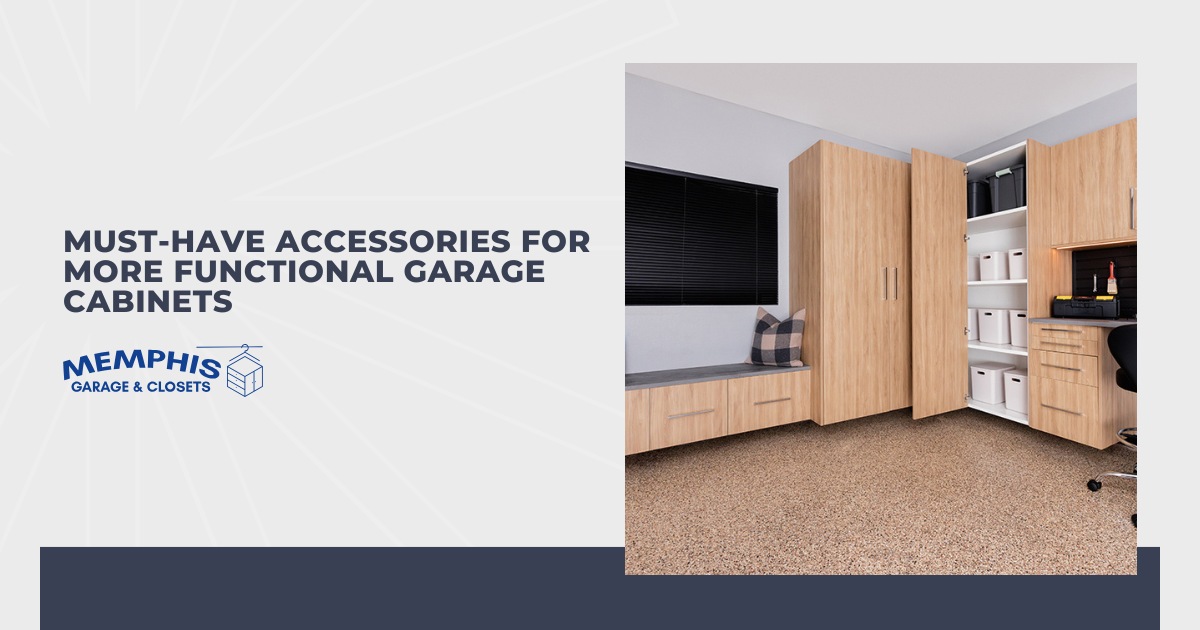
Garage cabinets get a bad reputation. People build them in, get excited about all that new space, and then shove bike helmets and half-used paint cans wherever they fit. A bare cabinet box gives you storage, but it doesn't give you a system. I've seen plenty of garages where the cabinets look great from the outside but fall apart functionally because nobody added the right inserts. The right accessories are what turn an empty box into something you actually want to open.
And the best part is you don't need to start over to get there. The accessories covered in this post work with the cabinets you already have, adding function where it's missing without requiring a full redesign. Some are simple add-ons you can install in an afternoon, and others are worth planning for before your cabinets go in. Knowing your options puts you in a much better position to build a garage that actually works for you.
Here are the must-have accessories that make garage cabinets more functional:
- Organizational bins and dividers
- Slide-out drawers
- Door-mounted storage racks
- Locking hardware and security hinges
- Adjustable shelving brackets
- LED interior lighting
- Label holders and tags
Keep reading to see how each one solves a specific storage headache and which ones make the most sense for your space.
Organizational Bins and Dividers
If you've ever opened a cabinet and immediately closed it again because you couldn't tell what was in there, this is the fix. Bins and dividers break a single shelf into defined zones, so every category of item has a place and stays there. Pull-out wire baskets are especially useful for smaller items like gloves, rags, and spray nozzles that tend to get buried on a flat shelf. Being able to pull the whole basket out and see everything at once saves a lot of unnecessary digging.
Modular dividers work a little differently. Instead of pulling a container out, they section off a shelf horizontally so you can keep categories side by side without them bleeding into each other. They're a good fit for shelves where you store bulkier items that don't need a basket but still need a boundary. A few dividers in the right spots can double how much organized space you actually get out of a single shelf.
The real advantage of using bins and dividers together is that your cabinet stays organized even when you're in a hurry. When there's a designated spot for something, it's easier to put it back in the right place instead of just setting it down wherever there's room. Consistency in how you store things is what keeps a well-organized garage from slowly turning back into a cluttered one. Bins and dividers don't just organize your space once; they make it easier to keep it that way.
Slide-Out Drawers
Most cabinet shelves are deep enough that things disappear toward the back. You put something in and slide it to the rear to make room for the next item, and eventually you're fishing around blind every time you need something. Slide-out drawers solve this by bringing the entire contents of a shelf to you. A full-extension drawer pulls out completely, so you can see and reach everything inside without moving anything out of the way first.
The weight capacity is what sets a good slide-out drawer apart from a basic shelf insert. Heavy-duty drawer systems are built to handle tools, power equipment, and hardware that would buckle a flimsy tray. If you're storing socket sets, wrenches, or cordless drills, you want a drawer that rolls smoothly even when it's loaded. Cheap alternatives tend to sag or stick over time, which defeats the purpose.
I'd recommend thinking about slide-out drawers early in the process if you're still planning your cabinet layout. Retrofitting them into existing cabinets is possible, but it's easier to size and position your cabinets around the drawer hardware you want to use. Some systems require a minimum cabinet depth to function properly, so knowing that upfront saves you from having to work around a constraint later. A little planning goes a long way toward getting the most out of this particular upgrade.
Door-Mounted Storage Racks
Cabinet doors are some of the most underused real estate in a garage. Most people focus on what goes on the shelves and completely overlook the inside of the door, which can hold a surprising amount without taking up any shelf space at all. Door-mounted racks attach directly to the interior panel and turn that blank surface into active storage. It's one of the few upgrades that adds capacity without adding footprint.
Spray cans, cleaning supplies, and small hand tools are the best candidates for door storage. These are items you reach for often, so having them visible and within arm's reach the moment you open the cabinet makes a real difference in how efficiently you work. A rack keeps them upright and organized instead of rolling around on a shelf or getting knocked over every time you grab something nearby. You'll notice the difference quickly once they have a dedicated spot.
Sizing matters when you're choosing door-mounted racks for your garage cabinets. The rack needs to clear the shelves when the door swings shut, so you'll want to measure both the door panel and the depth of your shelves before buying. Most manufacturers include clearance specs, and it's worth checking them carefully before committing to a system. Getting that measurement right the first time saves you from having to return hardware or modify your shelf heights after the fact.
Locking Hardware and Security Hinges
I think a lot of people underestimate how much is worth locking up in a typical garage. Power tools, automotive equipment, and chemicals used for lawn care or pest control all have good reasons to stay behind a locked door, especially in households with kids. Adding a lock to your garage cabinets is less about distrust and more about making sure the wrong hands don't get into the wrong things.
Locking hardware comes in a few different styles depending on how much security you need. A basic cam lock is easy to install and works well for cabinets that just need a deterrent. For higher-value tools or hazardous materials, a deadbolt-style cabinet lock or a hasp-and-padlock setup offers more resistance. Matching the lock type to what you're actually protecting keeps you from over-engineering a solution or under-securing something that matters.
Security hinges are worth adding to the conversation as well. Standard hinges can be vulnerable to being pried open even when a lock is in place, so pairing your lock with reinforced hinges closes that gap. They're especially useful on cabinets that face outward toward a garage door or are otherwise more accessible. The combination of a solid lock and reinforced hinges gives you a more complete solution than addressing either one on its own.
Adjustable Shelving Brackets
Fixed shelves are one of the most common sources of wasted cabinet space. When every shelf sits at a predetermined height, you end up with gaps that are too short for tall items and too tall for small ones. Adjustable shelving brackets let you reposition each shelf to match what you're actually storing, so you're not forced to work around a layout that wasn't designed with your specific needs in mind. A small change in shelf height can open up a surprising amount of usable space.
The practical benefit shows up most when your storage needs change. If you buy a new piece of equipment, switch seasons, or reorganize a section of your garage, adjustable brackets let you reconfigure without having to replace anything. You just move the bracket to a new hole, reset the shelf, and the cabinet works for your new setup. This kind of flexibility is hard to get from a fixed system no matter how well you plan it initially.
Bracket quality is worth paying attention to when you're shopping. Heavier shelves loaded with tools or automotive supplies put real stress on the bracket, and a flimsy clip-style system can fail under that kind of weight. Look for brackets rated for the load you expect to put on them, and make sure the cabinet's side panels have enough hole positions to give you a genuine range of adjustment. A well-chosen bracket system pays for itself in how long it holds up and how well it performs.
LED Interior Lighting
Deep cabinets and dark corners are a frustrating combination. You open the door, peer into the back of the shelf, and still can't tell if what you're looking at is the right tool or just something that looks like it from a distance. Interior lighting eliminates that problem by putting light exactly where you need it: inside the cabinet itself rather than relying on whatever overhead lighting happens to be nearby. It's a small addition that makes a noticeable difference in how quickly you can find what you're looking for.
I've found that battery-powered LED strip lights are the easiest starting point for most garages. They don't require any wiring, they install in minutes, and the adhesive backing holds up well inside a cabinet environment. For a more permanent solution, hardwired LED systems offer consistent brightness without the need to swap batteries, which is worth considering if you're outfitting a large number of cabinets at once. Either option is a significant upgrade over squinting into a dark shelf.
Motion-activated lights are another option worth knowing about. They switch on automatically when you open the cabinet door and turn off when you close it, so you never have to think about them. This is especially useful in a busy garage where your hands are often full and flipping a switch isn't convenient. Good lighting inside your cabinets is more functional and makes the whole space feel more intentional and put together.
Label Holders and Tags
A well-organized cabinet can still slow you down if you can't tell what's inside without opening it. Labels solve that problem before it starts by putting the information on the outside of the cabinet where you can see it at a glance. This matters more than most people expect, especially in a garage with multiple cabinets storing different categories of items. The fewer doors you have to open to find what you need, the more efficient your whole storage system becomes.
Label holders come in a range of styles to fit different cabinet types. Magnetic holders work well on metal cabinet faces and can be repositioned without leaving any residue. Clip-on tag frames attach to shelf edges and are a good option for labeling individual shelves inside an open cabinet. Adhesive label strips are the most flexible option and work on virtually any surface, though they're best used in spots where the layout isn't likely to change.
Consistency is what makes a labeling system actually work. Picking one format and sticking with it across all your cabinets makes the system intuitive for everyone who uses the garage, not just the person who set it up. Clear, specific labels work better than vague ones, so "cordless drill batteries" will serve you better than just "batteries." A labeling system that's easy to read and easy to maintain is one you'll actually keep up with.
Conclusion
I've yet to meet a garage owner who regretted adding any of these accessories once they were in place. The accessories you add are what determine whether your storage system holds up six months from now or slowly drifts back into chaos. Each item on this list targets a specific weak point, and together they turn a basic cabinet setup into something that genuinely supports how you work. Invest in the right additions upfront, and your garage cabinets will keep paying off every time you walk through that door.

Mike Beard has a bachelor’s degree in Business Administration and career history in Manufacturing and Supply Chain Management. Combining his passion for organization and design with his experience in business management has allowed Mike to realize his dream of helping Memphis, TN homeowners organize their homes with effective and unique storage spaces.
Memphis Garage & Closets
Lakeland, TN 38002
Monday - Friday: 9am - 6pm
Saturday: 9am - 6pm (By Appointment)
Sunday: 9am - 6pm (By Appointment)
